
Aït Khebbach Morocco Wedding: A Journey Through an Ancient Amazigh Tradition
Aït Khebbach: In southeastern Morocco, the Aït Khebbach (Aït Khabbash)—an Amazigh group historically associated with the Aït Atta confederation and former nomadic life—preserve a distinctive three-day wedding tradition .
Far from a simple ceremony between a bride and groom, it is a total cultural performance involving families, music, poetry, traditional dress, and community transmission .
Beyond ritual mechanics, the gathering operates as a socio-political re-anchoring where kinship networks negotiate alliances, test communal resilience, and encode collective memory into tactile and sonic artifacts.
The Ceremonial Tent: Symbol of Nomadic Memory
-
The Structure: Constructed prior to the wedding using traditional hair-yarn or heavy woven panels, the ceremonial tent serves as the central hub and gravitational axis for the bride, her maternal kin, and core activities .
-
Symbolism: More than a temporary shelter against desert extremes, it represents the community’s nomadic heritage (irehalen), collective memory, and persistent structural ties to the past even after settling permanently around regional oases .
Visual Splendor: Bridal & Groom Attire
-
The Radiant Aït Khebbach Bride: Adorned in a striking, high-visibility polychromatic combination featuring a layered red head covering/veil, stark white under-garments, colorful woven textiles, woolen belts and sashes, heavy silver bracelets and necklaces (izbian), and large amber-colored beads functioning as apotropaic wealth displays.
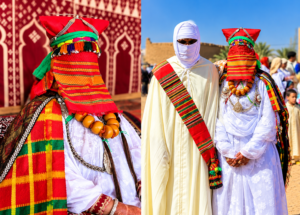
The Groom & Escorts (Isnain):
- The groom wears white clothing paired with a red textile wrapped defensively or liminally across the face.
- Accompanying men (isnain) wear white garments with black or indigo turbans, chosen specifically for their courage, strength, knowledge of customs, and ability to handle ceremonial challenges or tactile friction .
Key Rituals Across Three Days
-
Henna & Tent Preparation: Women occupy the inner sanctuary of the tent to sing traditional songs, play frame drums (bendir), dance, and apply intricate botanical henna to the bride’s hands and feet.
-
The Animal Procession: The bride travels toward the wedding tent mounted on a pack animal, physically flanked, buffered, and protected by the tactical isnain formation.
Three Circles & Milk:
- Upon arrival, the bride circles the exterior perimeter of the wedding tent three times before entering .
- She receives milk, ingests a measured portion, and sprinkles some toward the guests—symbolizing good fortune, agronomic/human fertility, and a prosperous future.
Performance, Food, and Community
-
Ahidous: A collective Amazigh performance combining shoulder-locking dance geometries, rhythmic footwork, singing, and oral poetry (amarg) that transmits cultural knowledge across generations .
-
Generous Hospitality: Sharing large family-prepared communal meals including multi-vegetable couscous, spiced meat tagines, homemade hearth bread, seasonal vegetables, high-sugar Moroccan mint tea, and traditional sweets to strengthen family and community bonds .
-
Women’s Role: Mothers, grandmothers, and female relatives anchor the tradition, acting as master curators who pass down artistic knowledge, clothing customs, and ritual mastery .
Resilient Living Ethnographic Continuity: Aït Khebbach nuptial celebrations demonstrate how pastoral memory persists inside sedentary architectural frameworks. By mobilizing tactile silverwork, indigo-and-crimson color codes, equestrian-guarded transit, and collective ahidous cadence, the community transforms a domestic union into a sovereign statement of Amazigh identity.